The DNA Network |
| The Latest Issue of Future Medicine [ScienceRoll] Posted: 07 Jul 2008 04:23 PM CDT Future Medicine is the only journal dedicated totally to personalized medicine. I share the table of contents and some interesting excerpts from the latest issue with you (some of the articles are free to access, some are not):
        |
| Posted: 07 Jul 2008 04:07 PM CDT  This is kind of older news but I ran into a video of a presentation by 23andme to a tech audience at Google (I think). If you aren't aware 23andme is a personal genome analyzing company. Basically they analyze the SNPs in your genome and give you all the associations with those SNPs. For instance they will tell you your ancestry and what SNPs that you have are associated with particular diseases. There are some pretty interesting questions and an interesting look at the interface of how a costumer of 23andme's services would 'surf their genome.' I guess that I could have also just found out all this stuff on the 23andme website. I was actually impressed with what they do. Integration with Facebook ect. The security of the data that they collect was stressed, which would be important to me if I was a customer. Also I liked the point that personalized genetics and medicine has been moving too slow and they might be the solution to this. They also plan to share anonymous data for drug reactions and efficacies based on SNPs. This would probably be very valuable information assuming they get lots of customers. This perhaps is the big problem with 23andme. The only SNPs looked at and the only genomic data collected at a statistically significant amount will be from customers who can afford the US$1000 price tag. Somehow I don't think my genetic relationship to African goat herders is going to be properly analyzed. |
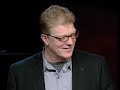
| Do schools today kill creativity? [ScienceRoll] Posted: 07 Jul 2008 04:00 PM CDT This is one of the best TED talks I’ve ever seen.
        |
| Structure-informative SNPs among European Americans [Yann Klimentidis' Weblog] Posted: 07 Jul 2008 12:01 PM CDT 100- 200 carefully selected SNPs are enough, they say, to adequately control for structure among European Americans "while maintaining power in association studies". Their method makes no assumptions about the origin or ancestry of individuals, nor, unfortunately, do they even have any information on this. Also, they find very little overlap between the AIMs (ancestry informative markers- actually, structure informative markers) they propose here and those found in the several other previous studies looking at genetic diversity in Europe, but: The greatest overlap is found between the panel we propose here and the 1,441 SNPs proposed by Tian et al. [27] as distinguishing between northern European and Ashkenazi Jewish ancestry.I'm sure Dienekes will have a field day with this one. Tracing Sub-Structure in the European American Population with PCA-Informative Markers Peristera Paschou, Petros Drineas, Jamey Lewis, Caroline M. Nievergelt, Deborah A. Nickerson, Joshua D. Smith, Paul M. Ridker, Daniel I. Chasman, Ronald M. Krauss, Elad Ziv PLoS Genetics 4(7) Abstract: Genetic structure in the European American population reflects waves of migration and recent gene flow among different populations. This complex structure can introduce bias in genetic association studies. Using Principal Components Analysis (PCA), we analyze the structure of two independent European American datasets (1,521 individuals–307,315 autosomal SNPs). Individual variation lies across a continuum with some individuals showing high degrees of admixture with non-European populations, as demonstrated through joint analysis with HapMap data. The CEPH Europeans only represent a small fraction of the variation encountered in the larger European American datasets we studied. We interpret the first eigenvector of this data as correlated with ancestry, and we apply an algorithm that we have previously described to select PCA-informative markers (PCAIMs) that can reproduce this structure. Importantly, we develop a novel method that can remove redundancy from the selected SNP panels and show that we can effectively remove correlated markers, thus increasing genotyping savings. Only 150–200 PCAIMs suffice to accurately predict fine structure in European American datasets, as identified by PCA. Simulating association studies, we couple our method with a PCA-based stratification correction tool and demonstrate that a small number of PCAIMs can efficiently remove false correlations with almost no loss in power. The structure informative SNPs that we propose are an important resource for genetic association studies of European Americans. Furthermore, our redundancy removal algorithm can be applied on sets of ancestry informative markers selected with any method in order to select the most uncorrelated SNPs, and significantly decreases genotyping costs. |
| Metabolomics [Yann Klimentidis' Weblog] Posted: 07 Jul 2008 09:04 AM CDT There's an interesting article in the Economist about ways to diagnose what the body is undergoing. For example: Douglas Kell, a researcher at the University of Manchester in Britain, has already created a computer model based on metabolite profiles in blood plasma that can single out pregnant women who are developing pre-eclampsia, or dangerously high blood pressure. Research published last year by Rima Kaddurah-Daouk, a psychiatrist at the Duke University Medical Centre in America, may not only provide a test for schizophrenia, but also help with its treatment. She found a pattern of metabolites present only in the blood of people who had been diagnosed with schizophrenia. The patterns change according to the antipsychotic drugs patients take and this may throw light on why some respond well to certain drugs, but others suffer severe side-effects.Eventually we could go back and forth between metabolomics and genomics (and microbiomics) in understanding various metabolic pathways. |
| Exactly What are Stem Cells? [Highlight HEALTH] Posted: 07 Jul 2008 09:00 AM CDT The ethical and moral debate over the use of stem cells has taken center stage over the past decade. Stem cells are of great medical interest, since they have the potential to develop into almost any type of cell in the body. Regenerative medicine focuses on the potential uses of stem cells in medicine and how they can provide effective treatment for a range of diseases. Stem cells have the capacity to divide indefinitely to replenish other cells in the body. When a stem cell divides, each daughter cell can remain a stem cell or become a more specialized cell, such as a red blood cell, a muscle cell or a nerve cell. An increasing body of evidence also suggests that molecular pathways and properties associated with normal stem cells is relevant to cancer development [1].
Stem cells are undifferentiated, meaning that they aren’t committed to becoming a specific kind of cell in the body. They are characterized by the ability to self-renew (remaining undifferentiated) and the capacity to differentiate into specialized cell types (termed potency). Potency specifies a stem cell’s differentiation potential. There are four classes of stem cell potency:
Pluripotent stem cells can be derived from a number of sources, all of which are associated with moral issues:
Pluripotent stem cells can also be obtained from umbilical cord blood, placenta and amniotic fluid. Although pluripotent stem cells have greater potential, multipotent adult stem cells are currently being used therapeutically. Adult stem cells can be found in many organs and tissues, including bone marrow, peripheral blood, brain, muscle, liver, skin and heart. Nevertheless, a number of limitations exist with adult stem cells [2]. Adult stem cells are found in small quantities in adult tissues and umbilical cord blood, raising doubt that they could be grown in clinically significant quantities. Additionally, adult stem cells have not been found for all tissues of the body, necessitating the use of pluripotent stem cells for the generation of certain tissue types. Since adult stem cells are multipotent, they cannot be induced to develop into any cell type, i.e. manipulated to differentiate into a specialized cell type different than their final tissue type. For more information on stem cell research and current federal policy on embryonic stem cell research, see Research!America. References
.gif) Thank you for subscribing by RSS or email. I work hard to make the articles on Highlight HEALTH engaging and I truly appreciate your interest and readership! Thank you for subscribing by RSS or email. I work hard to make the articles on Highlight HEALTH engaging and I truly appreciate your interest and readership!This article was published on Highlight HEALTH. Related articles |
| The Trip Part I - Normandy [The Daily Transcript] Posted: 07 Jul 2008 08:08 AM CDT In the next couple of posts I'll quickly recap some parts of my trip. (Hey it's my freakin' blog and I get to post on whatever subject I want!) The story begins when we landed at Charles de Gaul Airport. From there we met up with old friends and drove off to Caens, Normandy, birthplace of Guillaume le conquerant (aka William the Conqueror.) The term Normands is derived from the words "north men" and refers to the fact that this area was settled by viking tribes in the times of Charlemagne. Besides October 14th 1066, another important date in Normand history is June 6th, 1944 aka D-Day. And so after lunch of Oysters, Tartifette and other French delicacies, we drove to Courseulles-sur-Mer where the Canadian army landed. The beach is also famously known as Juno beach. In all there were 5 coordinated beach landings, two operations by the American troops, two by the Brits and one by the Canadians. Here's a picture of an old WW II bunker located near the Juno beach memorial (thanks to our travelling companion Claudi for the photos): Read the rest of this post... | Read the comments on this post... |
| Writing for informavores [Genetic Future] Posted: 07 Jul 2008 07:06 AM CDT Slate has a great article about the way people read online. Apparently the typical internet reader doesn't tolerate big slabs of uninterrupted text, so I should really be writing fewer posts like this one, and more posts like the one you're reading now.  Subscribe to Genetic Future. Subscribe to Genetic Future. |
| Identifying Digital Gems [Sciencebase Science Blog] Posted: 07 Jul 2008 07:00 AM CDT
The DOI system has several handlers, and indeed, that’s one of its strength: it is distributed. So, as long as you have the DOI, you can use any of the handlers (dx.doi.org, http://hdl.handle.net, http://hdl.nature.com/ etc) to look up a paper of interest, e.g. http://dx.doi.org/10.1504/IJGENVI.2008.018637 will take you to a paper on water supplies on which I reported recently. The DOI is kind of a hard-wired redirect for the actual URL of the object itself, which at the moment will be a research paper. It could, however, be any another digital object: an astronomical photograph, a chemical structure, or a genome sequence, for instance. In fact, thinking about it, a DOI could be used as a shorthand, a barcode, if you like, for whole genomes, protein libraries, databases, molecular depositions. I’m not entirely sure why we will also need the Library of Congress permalinks, the National Institutes of Health simplified web links, as well as the likes of PURL and all those URL shortening systems like tinyURL and snipurl. A unified approach, which perhaps worked at the point of origin, the creator of the digital object, which I’ve suggested previously and coined the term PaperID, would seem so much more straightforward. One critical aspect of the DOI is that it ties to hard, unchanging, non-dynamic links (URLs) for any given paper, or other object. Over on the CrossTech blog, Tony Hammond raises an interesting point regarding one important difference between hard and soft links and the rank that material at the end of such a link will receive in the search engines. His post discusses DOI and related systems, such as PURL (the Persistent URL system), which also uses an intermediate resolution system to find a specific object at the end of a URL. There are other systems emerging such as OpenURL and LCCN permalinks, which seek to do something similar. However, while Google still predominates online search, hard links will be the only way for a specific digital object to be given any weight in its results page. Dynamic or soft links are discounted, or not counted at all, and so never rank in the way that material at the end of a hard link will. Perhaps this doesn’t matter, as those scouring the literature will have their own databases to trawl that require their own ranking algorithms based on keywords chosen. But, I worry Perhaps I’m being naive, maybe students never surf the web in this way, looking for research papers of interest. However, with multidisciplinarity increasingly necessary in many cross-disciplines it seems unlikely that gems are going to be unearthed through conventional literature searching of a parochial database that covers a limited range of journals and other resources. A post from David Bradley Science Writer |
| Posted: 07 Jul 2008 06:50 AM CDT
As someone who turned 44 the other day, I want to believe I can improve my phenotype the “right” way. Given that I have neither extraordinary willpower nor God-given athletic talent, I’m hoping I might get by with a couple of coaches, two personal trainers, a physical therapist, a masseuse and a nanny. Or maybe just by going to the gym once in a while… |
| A little story [The Gene Sherpa: Personalized Medicine and You] Posted: 07 Jul 2008 06:21 AM CDT I want to wish everyone in the US a happy 4th of July. The fateful day took tremendous amounts of courage to stand up against status quo. Our Founding Fathers risked life and limb of not only... [[ This is a content summary only. Visit my website for full links, other content, and more! ]] |
| Paul Watson talks about CARMEN [business|bytes|genes|molecules] Posted: 06 Jul 2008 09:37 PM CDT I had the pleasure of seeing Paul Watson’s talk on CARMEN in person at the Seattle Conference on Scalability. I have covered CARMEN before and really like the idea of a generalized distributed bioinformatics service. While CARMEN currently focuses on electrophysiological experiments, it is very easy to picture the service being more general. Here is a screencast by Frank Gibson on CARMEN The previous post on web services infrastructures for systems biology covers similar concepts. |


 Sciencebase readers will likely be aware that when I cite a research paper, I usually use the DOI system, the Digital Object Identifier. This acts like a redirect service taking a unique number, which might look like this assigned to each research paper by its publisher and passing it to a server that works out where the actual paper is on the web.
| You are subscribed to email updates from The DNA Network To stop receiving these emails, you may unsubscribe now. | Email Delivery powered by FeedBurner |
| Inbox too full? Subscribe to the feed version of The DNA Network in a feed reader. | |
| If you prefer to unsubscribe via postal mail, write to: The DNA Network, c/o FeedBurner, 20 W Kinzie, 9th Floor, Chicago IL USA 60610 | |

No comments:
Post a Comment